Research
Humans and Interfaces
What began as research into driver response has expanded over the years to a multidisciplinary research effort looking into physical and cognitive aspects of human performance in health, safety, and ergonomics. This multidisciplinary study enlists the expertise of researchers in the fields of human factors, ergonomics, cognitive science, kinesiology, physiology, biomedical engineering, virtual environments, and digital human modeling. CAVS boasts a wide array of research areas such as:
Human Factors Research Brochure- Human-Robot Interaction
- Driver Behavior and Performance
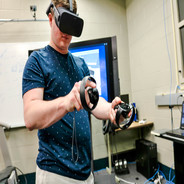
- Augmented and Virtual Reality
- Sports Performance
- Occupational Ergonomics
- Law Enforcement
Dr. Daniel Carruth's Body Armor Project was recently highlighted in MSU's Our State video series. The Human Factors Group enlists the expertise of researchers in the fields of human factors, ergonomics, cognitive science, kinesiology, physiology, biomedical engineering, virtual environments, and digital human modeling.
Materials and Mechanics
Materials and Mechanics at CAVS combine research from university, government, and professional agencies to develop cutting-edge technology for the processing of engineering materials. The area’s niche is based upon a multi-scale method that combines theory, simulation, and experimentation to provide material life cycle assessments. In accomplishing this multi-scale method CAVS hosts a variety of academic areas including mechanical engineering, aerospace engineering, civil engineering, computational engineering, mathematics, physics, education, and agriculture and biological engineering. Focus areas include:
Engineering Mechanics & Materials Science BrochureComputational Engineering and Science in Mechanics Brochure
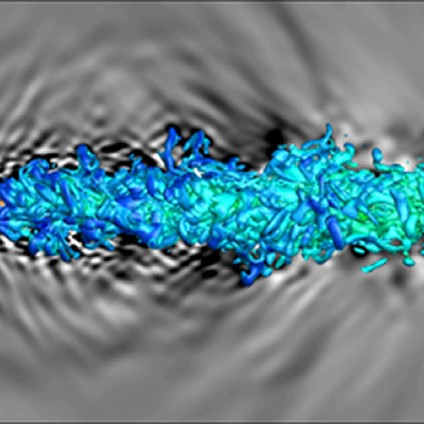
Spotlight: Massively Parallel Simulation of Dendritic Solidification
- Multi-scale Experimentation
- Materials Characterization
- Materials Processing
- Nano-microstructure Analysis
- Lightweight Materials
- Bio-materials
- Particulate Materials
- V&V
- Engineering Informatics
Modeling and Simulation
With a rich experience in solids and fluids mechanics, CAVS serves Mississippi State University, government agencies, and industry through the development of advanced computational engineering tools. Computational engineering accelerates materials (metals, ceramics, polymers, biomaterials, and geomaterials) in design and manufacturing applications by employing multiscale material modeling methods. This research generates critical knowledge on material behavior capabilities and complex industrial performance problems. This reduces the time and cost often required in complex field simulation while increasing fidelity and scope for practical engineering analysis and design problems. Researchers have conducted modeling and simulations for the design and analysis of vehicles, submarines, surface ships, aircraft, military launch vehicles, tactical missiles, turbomachinery, blood pumps, and more. CAVS research in Modeling and Simulation include:
Computational Fluid Dynamics BrochureAerospace Research Brochure
- Integrated Computational Materials Engineering (ICME)
- Aerodynamics
- Atomistic Modeling
- Chemically Reacting Flow
- Crystal Plasticity
- Dislocation Dynamics
- Electronic Structures Simulations
- Energetics
- Fluid-Structure Interaction
- Internal State Variable Theory
- Mesh Generation
- Multi-Objective Design Optimization
- Multiscale Material Modeling
- Thermal Management
- Uncertainty Analysis
Power and Energy
One of the greatest concerns for modern times is the topic of environmental sustainability. At CAVS, researchers continue to develop leading edge technologies that improve mobility, reliability, and safety, while paving the way for higher fuel efficiency and reducing the carbon footprint for future vehicle generations. To achieve this goal CAVS utilizes their state-of-the-art facilities to advance research of engine technologies, duel fuel utilization, hybrid vehicle components, and biofuels. The specific research areas include:
Advanced Vehicle Systems Brochure- EcoCAR
- Challenge X
- Automotive Electronics
- Hybrid Technologies
- IC Engines
- Noise, Vibration, and Harshness
- Emissions